

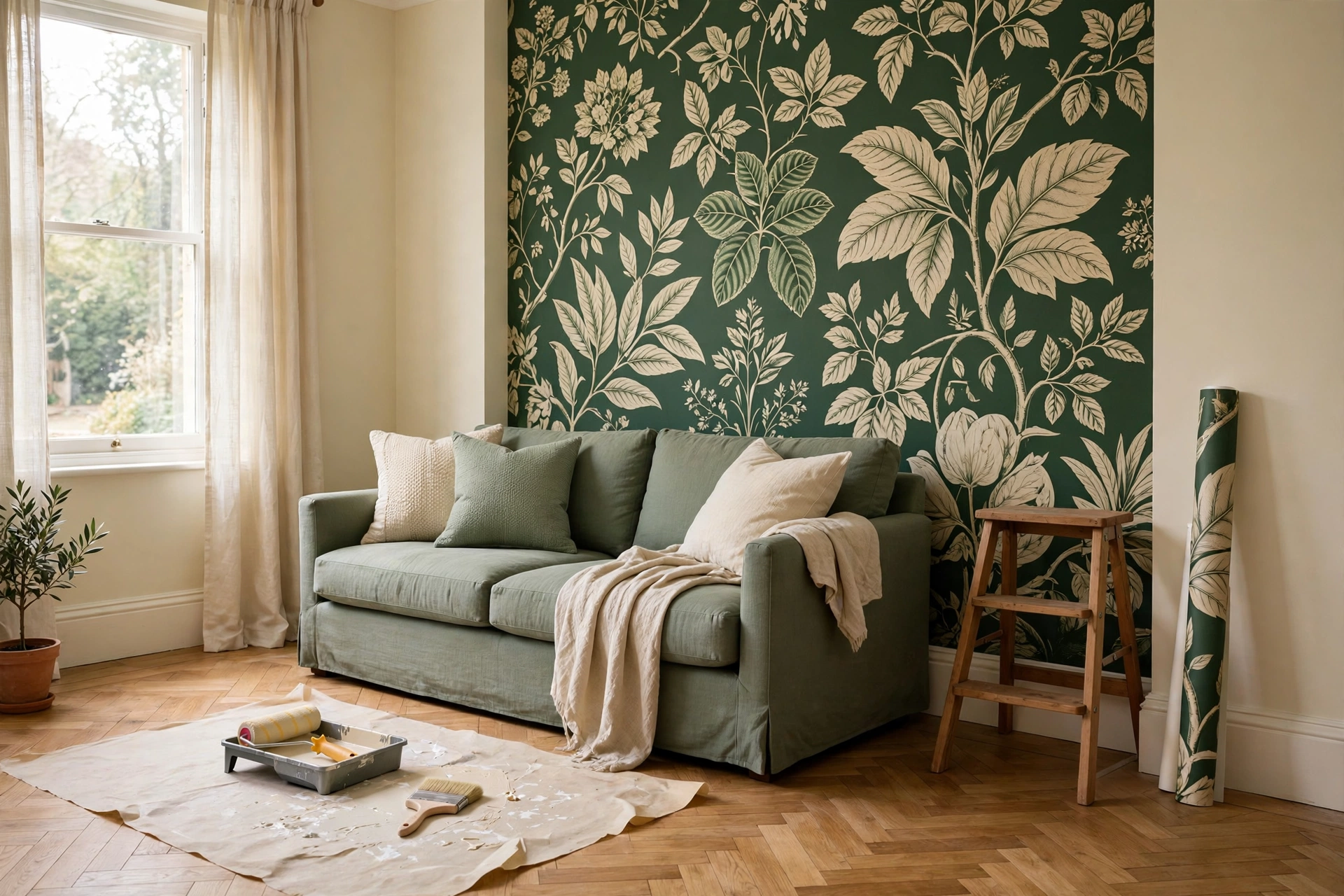
In fact, wallpaper can turn a plain room into a finished one in a weekend. Overall, this guide to living room wallpaper covers designs, measuring, hanging, costs and stripping. First, you will see if it is back in style, work out how many rolls you need, and learn the best hanging method for a first-timer. Next, you will learn how to choose a design that suits your room. In addition, you will learn how to measure, hang and care for it. Finally, you will know what it costs and how to avoid common mistakes. In short, you will finish with a room that feels complete.
For example, a single feature wall can change the whole room. However, the wrong paper can make a small room feel smaller. Therefore, it helps to plan before you buy. As a result, this guide starts with the basics and ends with the costs.
Is Living Room Wallpaper Back in Fashion in 2026?
Yes. Wallpaper has moved back into the main room. Large botanical prints lead the way. Meanwhile, deep green and near-black papers with gold detail are gaining ground. Plaster-effect prints give a quiet, textured look. However, few people paper all four walls. The 2026 look is one strong wall.
How Much Living Room Wallpaper to Buy
For a living room wallpaper project, count drops, not square metres. First, add up the wall widths and divide by 0.53 to get the number of drops. Next, divide 10.05, the roll length, by the wall height plus 10 cm. Then divide drops needed by drops per roll. A 4 by 3 metre room with 2.4 metre walls takes 7 rolls of plain paper, or 9 with a 53 cm pattern. A feature wall 3.5 metres wide takes 2 to 3 rolls. Finally, order one spare roll from the same batch.
How to Hang Paste the Wall Wallpaper
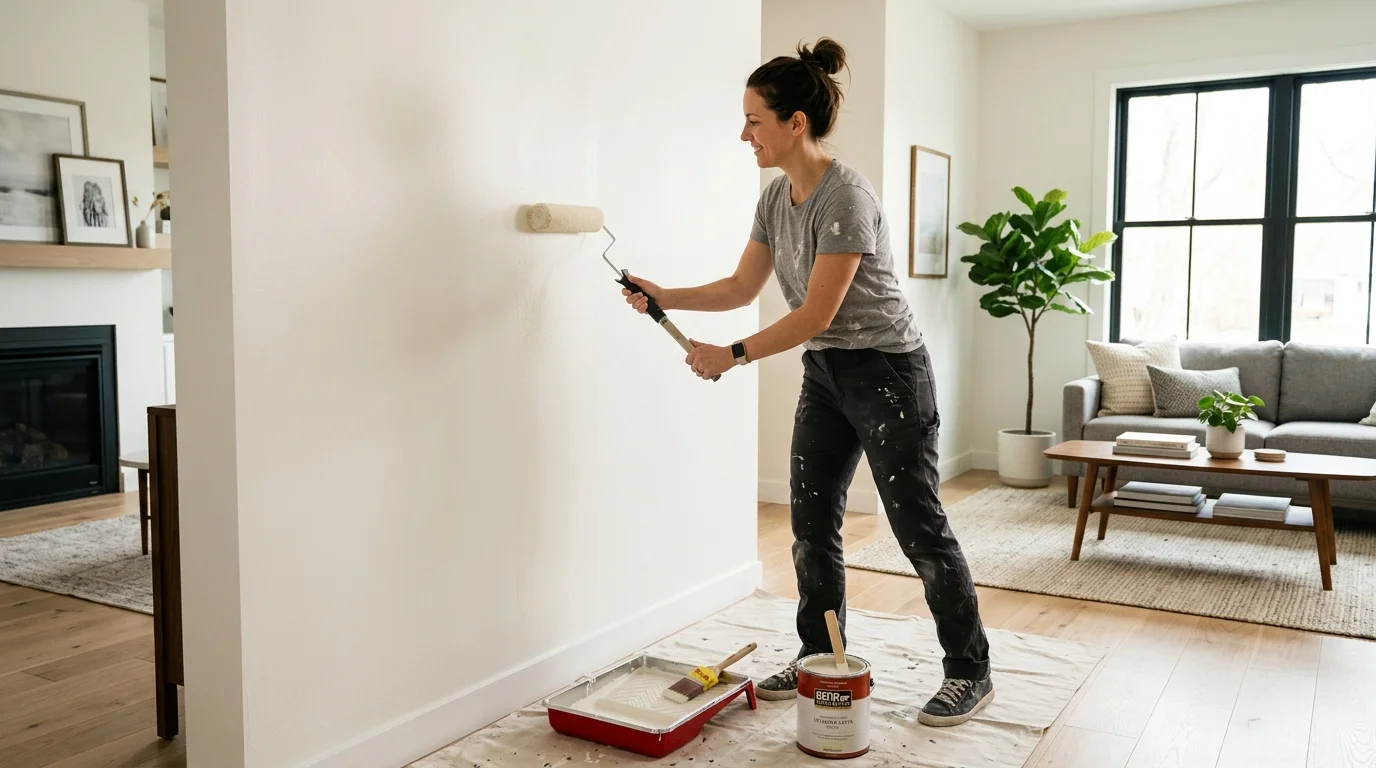
For a first living room wallpaper job, paste the wall paper is the friendliest type. Its backing stays stable when wet. First, gather a roller, a plumb line and a knife. Next, size the wall and let it dry. Then draw a plumb line for the first strip.
Next, roll the paste over one strip width. Look for tubs marked wallpaper paste paste the wall. Wall paste for wallpaper also comes as a powder. Hang the dry paper from the top, line up the pattern at the seam and smooth out bubbles. Trim at the ceiling and skirting. Shut the windows and doors for 24 to 48 hours while it dries. Paste the paper is the older way: paste the back and soak it for 5 to 10 minutes. Peel-and-stick paper needs no paste.
Living Room Wallpaper vs Paint
Wallpaper gives pattern, texture and depth that paint cannot match. Instead, paint costs less per wall and goes on faster. A room takes a day to paint and a weekend to paper. However, paper lasts longer. Good paper stays smart for 10 to 15 years, while paint needs a fresh coat after 5. In addition, paper hides small cracks that paint would show. In short, choose living room wallpaper for pattern.
What Does Living Room Wallpaper Cost?
A living room wallpaper job costs three things: paper, paste and labour. Mid-range paper costs £20 to £60 a roll, and designer paper can pass £100. Paste costs little. For example, a decorator charges £25 to £45 a roll for plain paper, and £40 to £75 for pattern-match paper. A feature wall costs £120 to £320 in labour, and a whole room £300 to £600. Stripping adds £150 to £300 a room. Overall, a do-it-yourself feature wall costs well under £200, while a decorator can pass £1,000.
Neutral, Plain and Natural Living Room Wallpaper Designs
Neutral wallpaper suits almost any home. For a living room wallpaper scheme, a plain wallpaper gives a calm base. Cream on cream wallpaper gives a flat wall a quiet richness. Baige wallpaper is how many people spell beige. Next, natural wallpaper woven from grasscloth or linen-look fibres adds a soft texture. Finally, a matt surface hides bumps, while a gentle sheen lifts light.
Wood-Effect and Panelled Looks
Timber looks bring warmth without the price of real wood. Wallpaper with wood effect copies planks and grain well. In addition, panelling wallpaper prints the frame, the panel and the moulding in one drop. Panelled wallpaper gives the same look behind a sofa. Wall paper for wood paneling suits rooms where real panels cost too much. For instance, chip wood wallpaper suits a cottage kitchen or a garden room. For example, wood panel effect wallpaper in pale oak lifts a dim hallway, and dark walnut suits a dining room wall. Black panel wallpaper works best on one wall. Wallpaper inside panels gives a framed look.
Feature Walls: Where the Pattern Goes
One patterned wall and three plain ones is the classic living room wallpaper scheme. First, pick the wall you notice first, often the sofa wall or the television wall. Next, put your strongest pattern there. The wallpaper ideas lounge room schemes use most are simple. Wall paper ideas for lounge rooms start with the sofa and rug. In addition, living area wallpaper needs a wipeable finish. Wallpaper in sitting room schemes sits behind the sofa. Living hall wallpaper suits the main room. Lounge wallpaper can be bolder.
Finally, if the print clashes with the curtains, pick a plain curtain. A wallpaper in black and white makes a bold graphic statement. Wallpaper with sparkles adds a gentle shimmer; shops list it as glitter glitter wallpaper. Keep sparkle to one wall. Finally, quirky wallpaper brings fun: bold animals and old maps. One wild wall is enough.
Hallways, Bedrooms and the Ceiling
Hallways get knocked about. Hallway panelling ideas start with paint below the rail and paper above it. Next, try half wall paneling ideas in a narrow hall. In addition, small prints and light colours suit halls. Wallpaper for hallway walls needs a washable finish. Bedroom wall wallpaper suits a pale floral or a quiet stripe. Wallpaper in the ceiling lifts the eye. First, fill cracks and sand the ceiling flat. Finally, get a helper: one person cannot hold a long strip overhead alone.
Woodchip Wallpaper
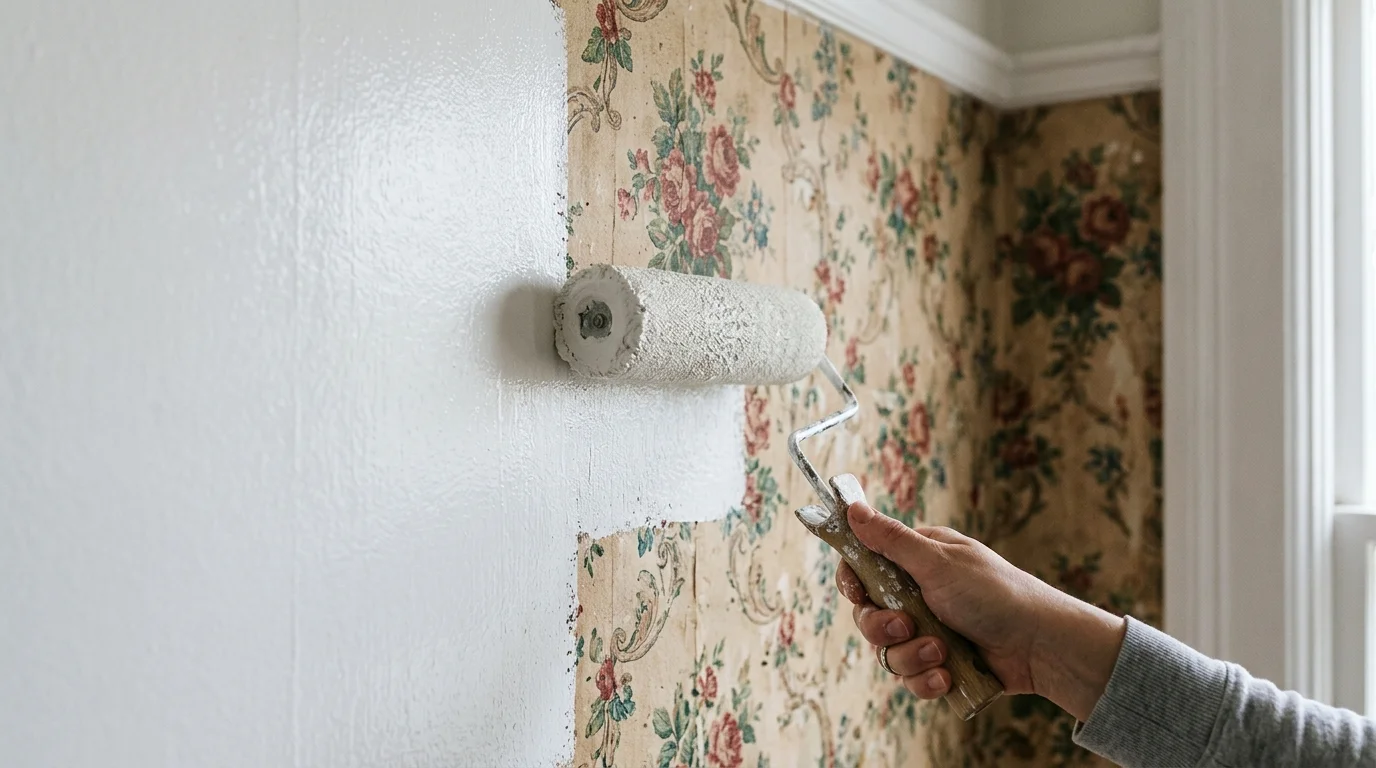
Woodchip wallpaper is paper with small chips of wood pressed in. It was the cheap cover-up of the 1970s. The chips hide bumps and hairline cracks. In addition, it takes paint well, so you can change the colour. However, it looks dated and is hard to remove. The thick surface stops moisture reaching the paste. If you like the texture but not the look, paint it. Our painting over wallpaper guide explains how to do that well.
Removing Old Wallpaper
Clear the room and cover the floor. First, score the paper with a perforating tool. The holes let water reach the paste. Next, sponge warm water and stripper solution onto the wall. Then lift it with a wide stripping knife. For stubborn paper, use an electric steam stripper. Hold the plate on the wall for 10 seconds, then scrape the paper away. Work in small sections. Do not hold it in one place, or the steam can damage the plaster. Woodchip needs extra work: scrape the chips off first. Finally, wash the wall with sugar soap.
Mistakes to Avoid
First, rolls from different batches can vary, so check the batch number on every roll. Next, a bad pattern match at the seams: cut each strip so the pattern lines up. A strip hung upside down is easy with a plain-looking print, so mark the top. Paste on the face must come off at once, or it dries to a shine. Finally, skipping the sizing and the spare roll: an unsized wall drinks the paste.
Textured Walls and Lining Paper
Can you paper over a textured wall? Light texture can take paper. The fix is lining paper. It goes on first and gives a smooth base. Lining paper comes in grades from 800 to 2000. Good walls take 800 or 1000 grade, rougher walls 1200 or 1400, and badly damaged walls 1700 or 2000. In fact, thick grades are heavy and need a longer soak. Light grades need 8 to 10 minutes. Finally, hang lining paper horizontally if the finish paper hangs vertically. In addition, fill deep holes first: lining paper hides small faults, not craters.
Kitchens and Bathrooms
Kitchens and bathrooms need a finish that stands up to steam. Wallpaper for kitchen use should be vinyl-coated or fully washable, so marks wipe off. Keep paper clear of the hob and sink. Toilet wallpaper ideas can be playful. For example, choose a small repeat for a small room. In addition, use vinyl paper in a bathroom. Never paper inside a shower area or directly above a bath. Finally, fit an extractor fan if ventilation is poor.
Renting? What to Know First
Renters can use wallpaper too, but the rules differ. First, ask your landlord in writing. Many tenancy agreements ban permanent changes. Next, pick a removable paper. Peel-and-stick paper lifts off cleanly from smooth painted walls. It costs more per roll, but you can take it with you. Test a small hidden patch first, and peel slowly at a low angle. Finally, keep your receipts and the landlord’s written yes. A single feature wall is the safest first step.
Frequently Asked Questions
These are the questions readers ask most about living room wallpaper.
How to hang paste the wall wallpaper? First, roll paste onto the wall and hang the paper dry from the top. Line up the pattern and smooth out the bubbles.
Can you wallpaper a ceiling? Yes. Choose a pale print, fill cracks and sand the ceiling flat first. Work with a helper.
What wallpaper is best for a living room? It depends on light and use. Bright rooms take deeper colours, dim rooms take pale tones.
How to choose wallpaper for a small living room? First, choose a pale paper with a small repeat and paper one wall only. Vertical stripes make walls feel taller.
Is wallpaper back in fashion in 2026? Yes. Botanical prints, moody dark walls and large murals are all in style. Most people paper one wall only.
Can you put wallpaper on a textured wall? Light texture can take paper, but heavy texture shows through. Line the wall first: 1200 or 1400 grade suits most rough walls.
How to remove old wallpaper without damaging walls? First, score the paper, soak it with warm water and stripper solution, then lift it with a wide knife. For stubborn paper, use a steamer.
Can you put wallpaper in a bathroom or kitchen? Yes, with the right finish. Use vinyl-coated or fully washable paper, keep it away from the hob, sink and shower, and ventilate the room well.




Leave a Reply