

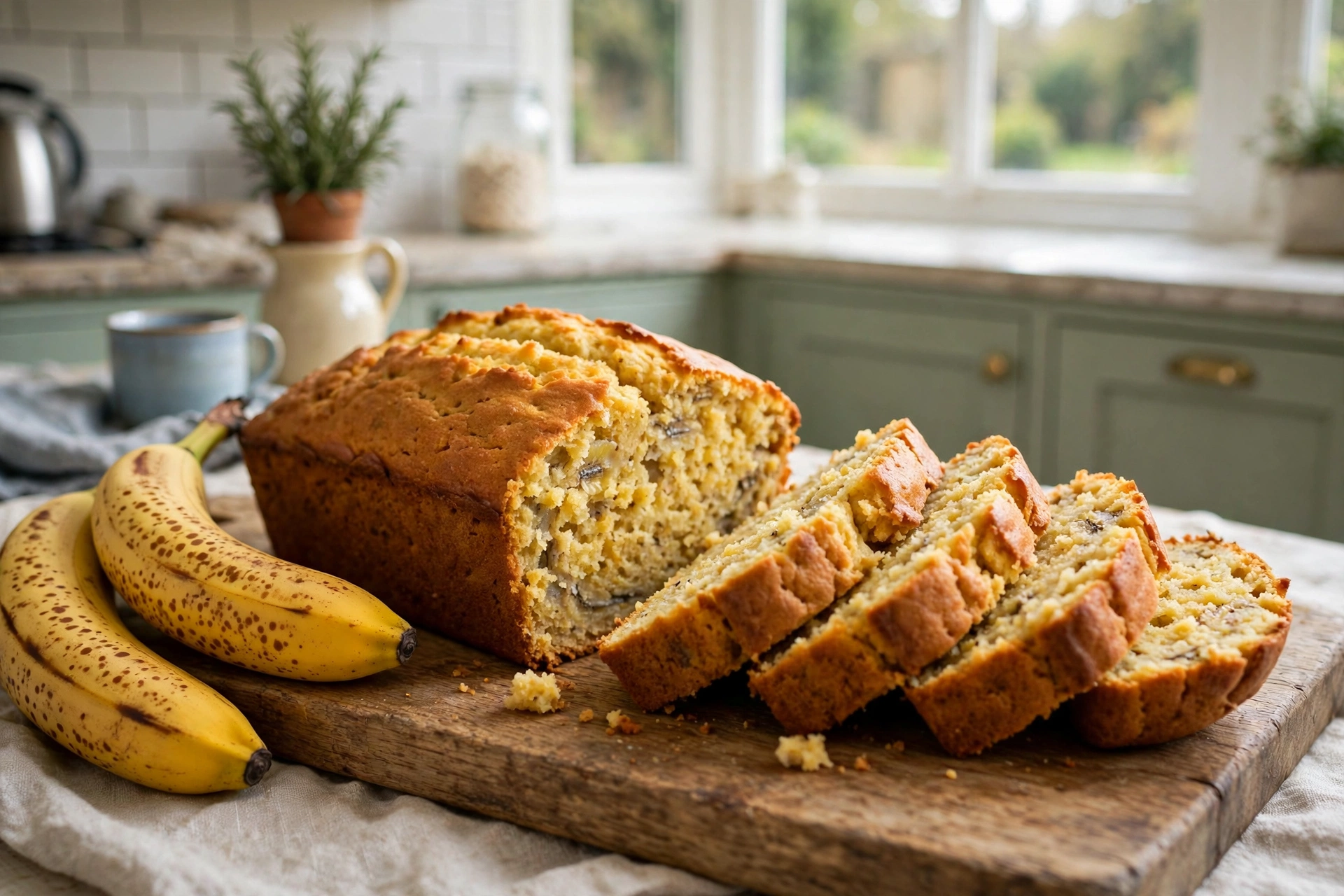
This banana loaf recipe turns spotty, overripe bananas into a moist, golden loaf. You need one bowl, one tin and under fifteen minutes of hands-on time. First, you weigh everything. Then you mix it. After that, the oven does the rest. As a result, you get a bake that suits breakfast, lunchboxes and afternoon tea. In fact, many bakers call it banana bread made easy, because the method forgives small mistakes. This guide covers the recipe, the ripeness test, the mistakes to avoid, and the storage rules. It also shows you what to bake next, from a Victoria sponge to a sourdough loaf.
What You Need for This Banana Loaf Recipe
You need a 900g (2lb) loaf tin, baking parchment, a large bowl, a fork and a skewer. Line the tin with parchment and leave a little overhang. That overhang helps you lift the loaf out later.
For the mixture for cake, weigh out 140g softened butter, 140g caster sugar, 2 large eggs, 140g self-raising flour, 1 teaspoon baking powder and 3 very ripe bananas. The bananas should weigh about 300g once peeled. Also, set out a pinch of salt and 1 teaspoon vanilla extract if you like it.
You do not need a mixer. A wooden spoon and a fork handle the whole job. However, a hand whisk speeds up the creaming step if you own one.
How to Cook Banana Bread, Step by Step
Heat the oven to 180°C (160°C fan, gas 4). Follow the steps in order and this banana loaf recipe works first time. Meanwhile, cream the butter and sugar together until the mixture turns pale and fluffy. Next, beat in the eggs one at a time. Then fold in the mashed bananas.
After that, sift the flour and baking powder over the bowl. Fold them in with a large spoon. Stop as soon as you see no dry flour. Overmixing toughens the crumb, so fold gently.
Pour the batter into the lined tin and level the top. Bake for 50–60 minutes, until a skewer pushed into the centre comes out clean. Finally, leave the loaf in the tin for 10 minutes. Then lift it onto a wire rack and cool it fully before you slice it.
How Ripe Should the Bananas Be?
Use bananas with black-speckled skins. The flesh inside should feel soft and smell sweet. On the other hand, green or just-yellow bananas give a dry, bland loaf, so wait until the skins spot.
If your bananas still look too yellow, put them in a paper bag with an apple overnight. The apple releases a gas that speeds ripening. Or you can bake whole unpeeled bananas at 150°C for 15–20 minutes until the skins turn black. Let them cool, then scoop out the soft flesh.
Frozen bananas work too. Thaw them first and drain off the liquid. In fact, thawed bananas mash easily and taste even sweeter.
Common Mistakes to Avoid in This Banana Loaf Recipe
First, do not slice the loaf while it still feels warm. Warm slices crumble and squash. Let the loaf cool fully on a rack.
Second, do not overmix the batter. Stir only until the flour disappears. Too much stirring builds gluten and turns the crumb tough and rubbery.
Third, do not open the oven door in the first 30 minutes. The sudden draught can sink the middle. Check it only after 40 minutes.
Fourth, do not guess the banana weight. Too much banana makes the middle soggy. Too little dries it out. Weigh the peeled bananas and aim for about 300g.
Finally, do not skip the skewer test. A clean skewer tells you the centre has set. If batter clings to it, give the loaf another 5–10 minutes.
Banana Loaf Recipe Variations
Once you know the base, you can change it. For a banana loaf with chocolate, fold 75g dark chocolate chips into the batter before you pour it into the tin. The chips melt into soft pockets.
For a recipe for banana cake, bake the same mixture in a round 20cm tin for 35–40 minutes. Then spread cream-cheese icing over the top once it cools. It becomes a banana bread cake that suits birthdays.
For a recipe for marble cake, split the batter in half. Stir 1 tablespoon cocoa powder into one half. Then spoon the two batters into the tin in alternate blobs and drag a skewer through them once. The swirl looks smart and tastes of chocolate and vanilla.
More Bakes to Try Next
This banana loaf recipe makes a good first bake, and the same skills carry into other bakes. Start with a victoria sponge cake recipe. Cream 200g butter with 200g caster sugar, beat in 4 eggs, then fold in 200g self-raising flour. Bake it in two 20cm tins and sandwich the layers with jam and cream. A victoria sandwich recipe works the same way, and it teaches you how to judge a sponge by touch.
Next, try making bread. A sourdough loaf needs only flour, water, salt and a starter, but it rewards patience. If you want to learn how to cook sourdough bread, start with a simple overnight loaf. Bake it in a hot Dutch oven, or use a baking tray with a roasting tin over it. A recipe for hamburger rolls uses the same dough skills, and it gives you soft buns for the weekend.
For a change of pace, try making sugar cookies. Cream butter and sugar, add an egg and vanilla, then fold in plain flour. Chill the dough, roll it out and cut shapes. Also, learn how to make gingerbread men the same way. Add ground ginger and treacle to the dough, then decorate the cooled biscuits with icing.
Finally, try a summer pudding recipe in berry season. Line a bowl with bread, fill it with stewed summer fruit, cover it with more bread and chill it overnight. It uses stale bread well and needs no oven at all. You can even use pastry sheets for a quick fruit tart when you want something faster.
Which Flour Should You Use?
Flour choice changes the crumb, so pick it with care. For this loaf, self-raising flour does the lifting. It already holds baking powder, so you only add a little extra.
But what flour for cakes works best in general? Plain flour plus baking powder gives you control. Cake flour and flour blends also work — cake flour feels finer and gives a softer crumb. So, when you choose flour for a cake, match the flour to the bake. Use plain flour for a sturdy loaf and finer flour for a light sponge.
Strong flour suits bread, not cake. For example, strong white bread flour holds lots of water and builds a chewy crumb. You can also buy a strong flour bread flour blend for the same job. Loaves labelled strong flour white need that strength for a good rise. In a cake, though, strong flour turns the crumb tough. So keep strong flour for bread and use plain or self-raising flour for cakes.
How to Store, Freeze and Serve the Loaf
Wrap the cooled loaf in foil or store it in an airtight tin. It keeps for 3–4 days at room temperature. In fact, many people say it tastes better on day two, once the flavours settle.
This banana loaf recipe freezes well, so bake a double batch if you like. Slice the loaf first, then wrap each slice in cling film and pack the slices in a freezer bag. They keep for up to 3 months. To serve a slice from frozen, thaw it at room temperature or warm it for 20 seconds in the microwave. That is how you enjoy cake from frozen without drying it out.
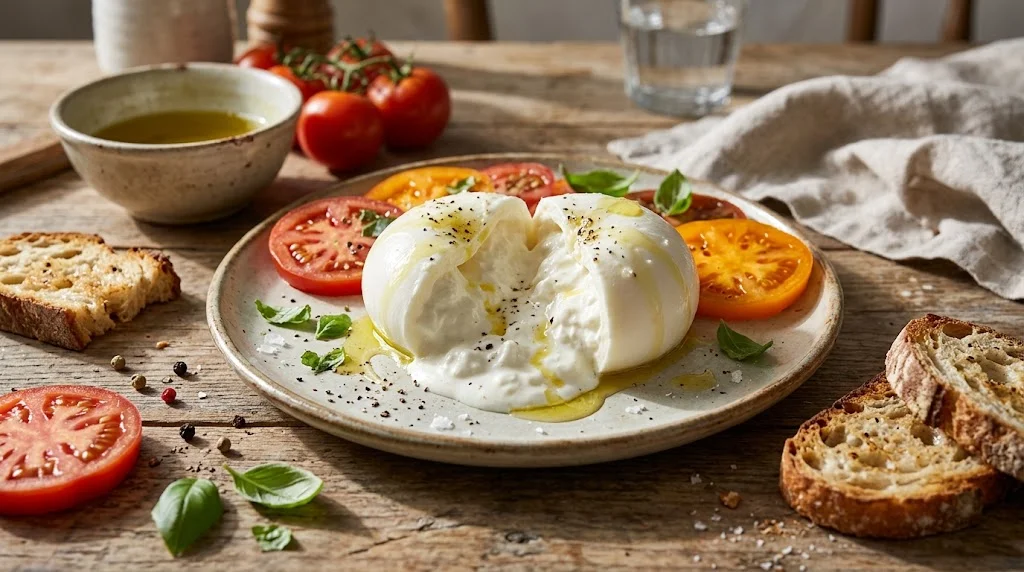
For a weekend brunch, serve thick slices toasted with salted butter. Or serve it as part of a brunch spread — our burrata cheese guide shows how to serve burrata well. The creamy cheese and the sweet loaf balance each other nicely.
Baking Gifts and Baking with Kids
A homemade loaf makes a thoughtful present. Wrap a cooled loaf in baking parchment, tie it with string and add a handwritten label. That simple wrap turns baking gifts into something personal. Add a jar of jam or a small bag of coffee beans and the gift feels complete.
Also, kids love this bake too. A kids baking set gives small hands their own tools, and this recipe suits beginners. Let children mash the bananas with a fork and stir the batter. They learn to weigh, mix and wait — and they get to eat the result.
Banana Loaf Recipe FAQs
Can I use frozen bananas in this banana loaf recipe?
Yes. Thaw them first and drain off the liquid. Thawed bananas mash easily and taste sweet, so they work well here.
How do I know when the loaf has finished baking?
Push a skewer into the centre. It should come out clean. If batter clings to it, bake for another 5–10 minutes and test again.
Why did my loaf sink in the middle?
You probably opened the oven door too early, or you used too much banana. Weigh the peeled bananas and keep the door shut for the first 30 minutes.
Can I make this recipe without eggs?
Yes. Replace each egg with 60g mashed banana or 3 tablespoons of yoghurt. The loaf turns out a little denser, but it still slices well.
How long does banana loaf keep?
Wrap it well and it keeps for 3–4 days at room temperature. Slice and freeze the rest for up to 3 months.
Now you have the full method, the ripeness test and the storage rules. Keep this banana loaf recipe handy for the next bunch of spotty bananas. Bake it this weekend, then try the Victoria sponge or the sourdough next.




Leave a Reply