

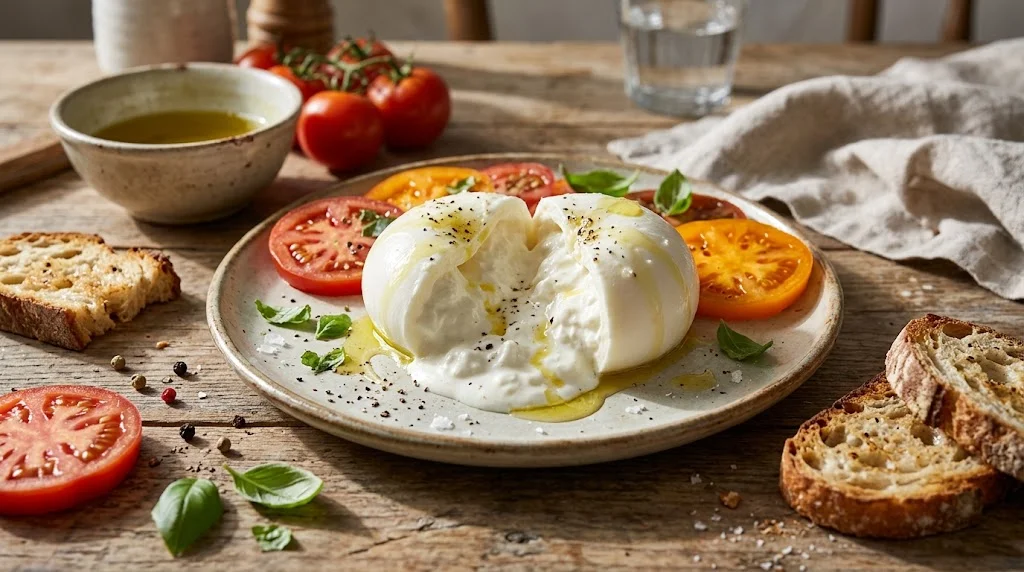
Few culinary experiences rival slicing into fresh Italian cheese. First, you pierce the tender skin. Then, a rich, velvety core flows gracefully across the plate. Food lovers around the globe cherish classic burrata on antipasti platters. However, its charming sibling now claims center stage in modern gourmet kitchens.
This artisanal cheese hails from the sunny region of Puglia in Southern Italy. In fact, it captures everything diners adore about fresh cream curds. Furthermore, it delivers that indulgence in a sleek, individual portion. Once you master its culinary traits, you can easily turn everyday meals into unforgettable feasts.
What Is Burratina Cheese?
In the Italian language, the suffix “-ina” denotes something small and dainty. Therefore, burratina simply means a petite, personal version of traditional burrata cheese. Standard spheres often weigh between 200 and 300 grams. In contrast, this compact specialty usually weighs between 100 and 125 grams. As a result, it serves as the ultimate individual starter.
Cheesemakers stay entirely faithful to ancient southern Italian traditions. First, they stretch warm mozzarella curd into a pliable pouch. Artisans call this stretchy base pasta filata. Next, they fill the hollow shell with fresh stracciatella. This decadent filling blends torn mozzarella shreds with thick, silky dairy cream. Finally, they pinch the pouch shut at the top. The finished orb features a firm outer skin with a luscious, creamy core.
Burratina vs. Burrata vs. Fresh Mozzarella: Key Differences
Home cooks often compare this specialty to other fresh Italian cheeses. However, each variety offers unique textures, structures, and uses.
Standard fresh mozzarella consists of solid curd from crust to core. Consequently, it provides a firm, springy bite and a clean milk flavor. It retains its shape cleanly when you slice it for Caprese salad. Similarly, it melts smoothly across a hot pizza crust.
In contrast, both burrata and its smaller sibling provide two distinct textural layers. Specifically, each features a firm pouch that encases an oozing, liquid center. The true difference lies in the portion size. A large sphere belongs on a communal table where friends share it with crusty bread. Meanwhile, a single burratina belongs on an individual plate. Thus, one diner enjoys opening the cheese without sharing the rich cream inside.
Flavor Profile and Texture Experience
The real beauty of eating a fine burratina comes from its contrasting textures. The exterior pouch feels soft yet holds together under a fork. Then, it yields gently and spills its hidden contents onto the plate.
On the tongue, the profile tastes mild, sweet, and clean. Fresh dairy cream drives most of the flavor. In addition, a subtle lactic tang balances the heavy cream so it never feels heavy. A whisper of natural butteriness lingers on the palate after each bite. Because soft curds soak inside pure cream, every mouthful offers both silkiness and pleasant substance.
How to Serve and Pair Burratina Like a Pro
Many home cooks make one major mistake with fresh Italian dairy. Specifically, they serve it straight out of a cold refrigerator. Chilling stiffens the fats inside the cheese. As a consequence, cold temperatures lock up the runny filling and mute the fragrant aromas.
Therefore, you should always remove your burratina from the fridge thirty to forty minutes before dinner. This resting period allows the cheese to reach room temperature. Consequently, the pouch softens, and the creamy filling flows freely just as the cheesemaker intended.

When building your dish, keep your pairings fresh and balanced:
-
The Summer Garden Style: Arrange the cheese over sliced heirloom tomatoes. Next, drizzle quality extra virgin olive oil over the top. Scatter torn basil leaves, and finish with crunchy sea salt and cracked black pepper.
-
The Rustic Antipasto Plate: Set the cheese beside thin slices of Prosciutto di Parma or spicy nduja. Then, add marinated artichokes and warm, toasted sourdough.
-
The Sweet and Savory Blend: Balance the cream with juicy peaches, fresh black figs, and wild honey. Finally, add a light splash of aged balsamic glaze from Modena.
Storage Tips and Handling
Artisans make this fresh cheese without chemical preservatives. For that reason, proper handling remains essential. Always verify that the unopened ball rests fully submerged in protective whey or salted brine.

Store your burratina inside the coldest zone of your refrigerator until mealtime. Once you open the plastic container, eat the cheese quickly. The exposed cream absorbs refrigerator odors very fast. In addition, the delicate fats sour within a few days. Therefore, you should consume the cheese within 24 to 48 hours for prime taste and texture.
FAQs
Can you freeze burratina?
You should never freeze this fresh cheese. Freezing breaks the delicate bond between water and milk fats. Consequently, the smooth cream turns grainy, watery, and dull upon thawing. Always enjoy it fresh.
What type of milk do cheesemakers use?
Producers traditionally craft this delicacy with fresh cow milk. However, some boutique Italian farms use water buffalo milk instead. Buffalo milk yields a richer body alongside a deeper, earthy tang.
Can you bake burratina on a pizza?
Never bake the cheese inside a scorching oven alongside raw dough. Intense heat causes the delicate cream to separate. As a result, watery moisture ruins your crisp pizza crust. Instead, bake the crust and toppings first. Then, place the intact burratina onto the hot pizza right before serving. The residual heat warms the center without breaking the sauce.
A Versatile Addition to Any Table
This compact Italian treasure brings instant elegance to every dining room. Whether you prepare a quick lunch or host an elaborate dinner party, it always delights guests. Simply serve it at room temperature, select seasonal accompaniments, and enjoy pure artisan craftsmanship at home.





Leave a Reply