

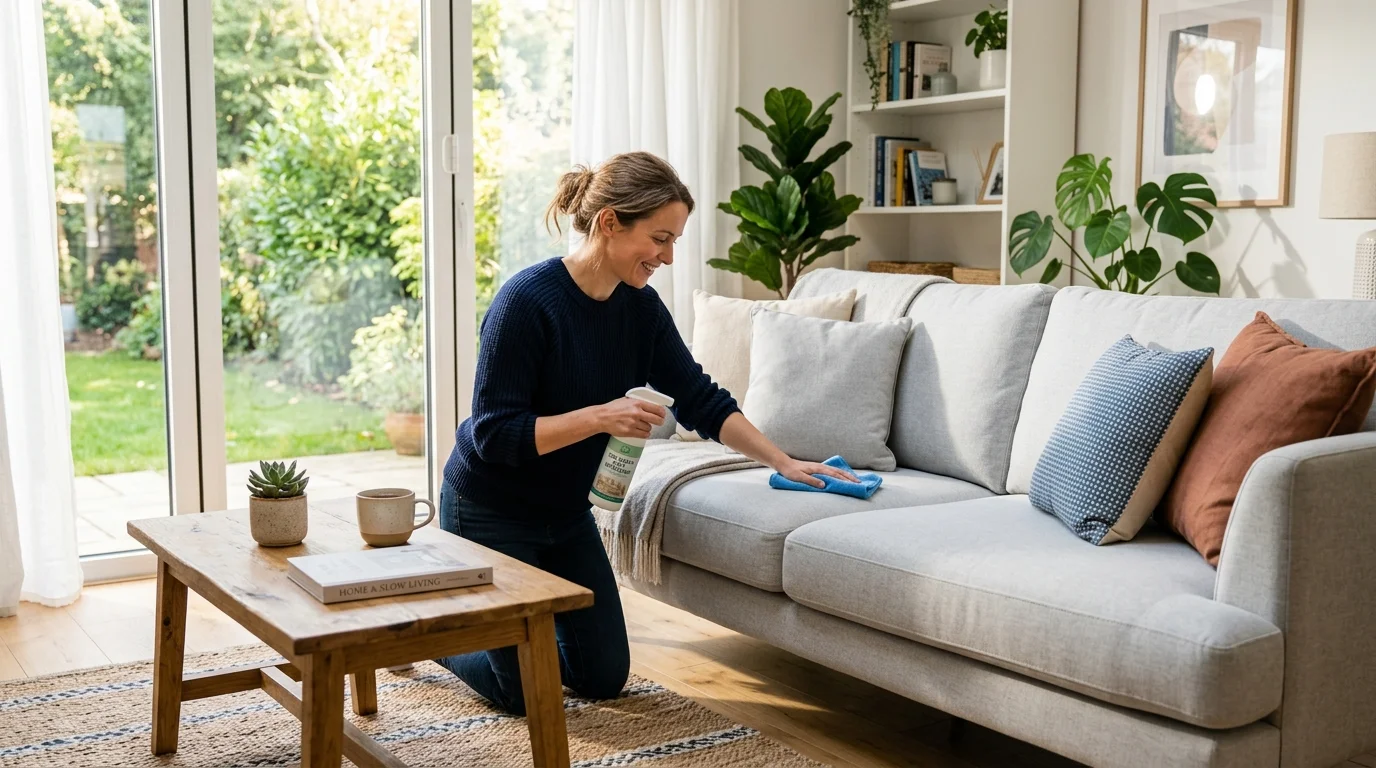
Your couch is easily the focal point of your living room. It is where you unwind after a long day, host movie nights, and share quiet moments with family. However, daily use brings dust, accidental spills, pet dander, and everyday wear that can quickly leave your furniture looking tired. Learning how to clean sofa fabrics correctly preserves the beauty of your investment and extends its lifespan for years to come.
Many homeowners avoid deep cleaning because they fear damaging delicate upholstery or leaving water marks. Fortunately, keeping your seating pristine does not require expensive tools or harsh chemicals. With a clear understanding of your couch material and the right household solutions, you can refresh your living room safely and effectively.
Step 1: Decode Your Sofa Care Tags
Before applying water, vinegar, or any cleaning solution, locate the care label on your furniture. This small tag, typically found under the seat cushions or along the bottom frame, provides vital instructions on which cleaning agents are safe to use.
Here is what these standardized upholstery cleaning codes mean:
| Cleaning Code | What It Means | Safe Cleaning Agent |
| W | Water-based cleaner | Water-based detergents, mild dish soap, distilled water solutions. |
| S | Solvents only | Dry-cleaning solvents or specialized water-free chemical cleaners. |
| S/W or WS | Solvents and water-based cleaners | Both water-based and solvent cleaners are safe to apply. |
| X | Vacuum only | Strictly vacuum or brush only. Professional cleaning required for deep stains. |
Step 2: Routine Maintenance & Essential Pre-Cleaning Steps
A proper deep clean always begins with thorough surface prep. Skipping these initial steps can force surface dust deeper into the fabric fibers once moisture is added.
-
Remove Loose Debris: Clear off throw pillows and removable covers.
-
Vacuum Thoroughly: Use a soft brush attachment to hoover down the sides of cushions, along seams, and across the front and back panels. Regular weekly vacuuming protects fabric fibers from abrasive grit.
-
Plump and Rotate Cushions: Practice routine cushion plumping to help fillings retain their loft. Rotate seat cushions regularly to distribute wear evenly and prevent unsightly sagging.
-
Prevent Color Fading: Keep pale or brightly dyed furniture away from direct sunlight, or draw blinds during peak afternoon hours to prevent color fading over time.
Step 3: Material-Specific Deep Cleaning Guide
Not all fabrics respond to cleaning the same way. Below are tailored procedures for different upholstery materials.
Fabric & Woven Upholstery
For standard fabric couches marked with code W or WS:
-
Mix two cups of distilled water with one tablespoon of mild liquid dish soap and one tablespoon of white vinegar in a spray bottle.
-
Lightly mist the fabric without soaking the internal padding.
-
Gently agitate the surface in circular motions using a soft microfiber cloth.
-
Wipe away excess moisture with a damp, clean cloth and allow the piece to dry thoroughly.
Leather & Faux Leather
Leather requires gentle, moisture-controlled care to prevent cracking:
-
Wipe down the surface with a damp microfiber cloth to pick up surface dust.
-
Apply a specialized leather cleaner or a mild soap solution using a soft sponge.
-
Immediately dry the surface with a clean towel.
-
Finish by applying a high-quality leather conditioner every six months to keep the material supple.
Velvet, Suede & Microfiber
Delicate fabrics like velvet or microsuede require extra care to avoid crushing the texture:
-
Use a gentle alcohol-based solution for microfiber marked code S as it evaporates quickly without leaving water rings.
-
For velvet, brush lightly along the grain using a dedicated upholstery brush to restore the soft pile after cleaning.
Step 4: How to Deodorize Sofa Naturally Using Baking Soda
Trapped odors from pets, food, or humidity can linger long after surface stains are gone. Learning how to clean sofa cushions naturally involves one simple household staple: baking soda.
-
Sprinkle Generously: Liberally coat the entire seating surface with pure baking soda.
-
Let It Sit: Allow the baking soda to rest for at least 30 to 60 minutes. For deep-seated odors, leave it overnight.
-
Vacuum Clean: Use your vacuum brush attachment to remove all residue, leaving behind a fresh, neutralized scent.

Step 5: Emergency Spot Cleaning for Tough & Specific Stains
Accidents happen, but acting quickly prevents permanent discoloration. Always blot stains with a dry paper towel rather than rubbing, which spreads liquid deeper into upholstery fibers.
Step 6: Fast-Drying, Sanitizing & Mold Prevention Protocol
Over-wetting cushion foam is a leading cause of damp smells and mold growth. Following proper drying protocol ensures your furniture stays clean and hygienic:
-
Increase Airflow: Position a standing fan directly toward the couch or open windows to promote air circulation.
-
Use a Dehumidifier: If cleaning in humid weather, run a dehumidifier nearby to quickly extract trapped moisture.
-
Sanitize Safely: To sanitize without overwetting, hold a handheld steam cleaner several inches away from fabric (only if care code permits) to destroy bacteria without soaking internal layers.

Step 7: Post-Clean Protection & Long-Term Care
Once your furniture is completely dry, take preventative steps to keep it looking great:
-
Apply a fabric stain shield spray on new or freshly cleaned woven furniture to repel future liquid spills.
-
Treat natural leather with protective conditioning creams.
-
Keep pet blankets on high-use seating areas to catch dander and sharp claws.
How to clean sofa and When to Call a Cleaner
While home remedies handle daily upkeep effectively, certain situations call for professional equipment:
-
Code X Fabrics: Furniture that strictly forbids water or solvents.
-
Antique or Silk Pieces: Vintage or delicate natural silk items requiring dry extraction.
-
Widespread Mold or Flooding: Deep structural moisture that home vacuums cannot pull out safely.
FAQs
How to clean sofa, how should you deep clean a fabric couch?
Routine vacuuming should be done weekly, while a thorough deep cleaning is recommended every six to twelve months depending on household use and pet activity.
Why does my couch smell worse after cleaning?
If upholstery smells musty after washing, internal cushion padding remained damp for too long. Place the furniture in a well-ventilated room with fans running to dry it out completely.
Can you wash removable cushion covers in the washing machine?
Check the care label first. Even if covers zip off, machine washing can shrink the fabric or break down protective coatings. Air drying is always safer than using a machine dryer.
Conclusion:
Mastering how to clean sofa upholstery at home does not have to be intimidating or time-consuming. By taking a few minutes to check your furniture’s care tags, establishing a consistent weekly maintenance routine, and acting quickly on unexpected spills, you can keep your couch looking vibrant, smelling fresh, and feeling comfortable for years to come.




Leave a Reply