

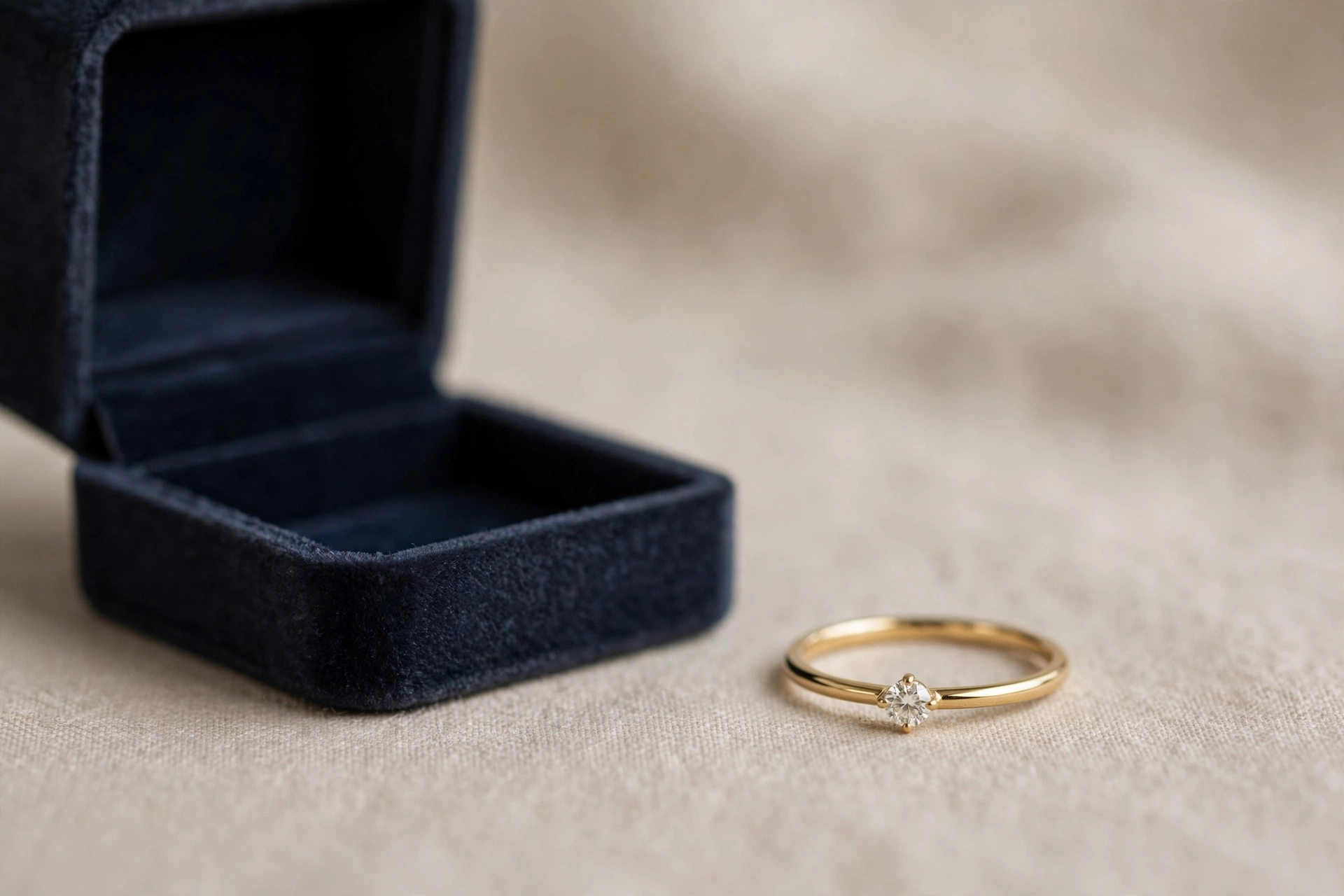
A promise ring marks a commitment between two people. It does so without the formal weight of an engagement. It can mean loyalty, a shared future, or simply that you take each other seriously. Unlike an engagement ring, it carries no set timeline and no fixed design. That freedom is the point: the couple decides what the ring means. This guide explains what it is and how it differs from an engagement ring. It also covers which finger to wear it on, and how to choose the style, stone and metal.
You will find the main styles below. They run from a plain solitaire engagement ring to a bold diamond engagement band. You will also find the stones people choose most: diamond, amethyst and topaz. Then come the metals, gold and platinum, and a plain guide to carat sizes. No jargon, no pressure, just the facts you need before you buy.
What Is a Promise Ring?
A promise ring is a ring people give to mark a promise between two people. The promise itself can take many forms. For some couples it means fidelity while they live apart. For others it means a shared plan to marry one day, without a date set. And for some it marks a personal vow. It can mean staying sober, supporting each other through a hard year, or keeping a friendship strong. The ring holds the meaning the giver and the wearer agree on, and that is what makes it personal.
What materials suit it? Almost any metal and stone will do. Most people choose a slim band with a small stone. The ring should feel light enough for daily wear. Others choose a plain band with no stone at all. Either way, the design stays simpler than an engagement ring, so no one mistakes one for the other.
Promise Ring vs Engagement Ring
An engagement ring is a public promise to marry. A promise ring is a private promise about a direction. That single difference shapes everything else: the design, the finger, and the moment of giving.
An engagement ring usually arrives at the proposal. It sits on the ring finger of the left hand, with a centre stone that draws the eye. The other ring usually arrives quietly, with no audience and no speech, and it often sits on the right hand instead. It also tends to use a smaller stone and a slimmer band. As a result, it reads as a personal token, not a public announcement.
It can also come first. Many couples start with one and move to an engagement ring later, when the time feels right. Others never make that move, and it stays the ring that matters most. Either path works, because the couple sets the meaning.
Proposal Ring and Engagement Ring: Where a Promise Ring Sits
A proposal ring is a stand-in. It appears at the proposal itself, when the maker still works on the real ring or the buyer wants the recipient to choose. This one is different: it is a real ring in its own right, given before any proposal. So the three rings sit in a clear order. It comes first, as a quiet commitment. A proposal ring covers the proposal moment. An engagement ring follows, as the formal promise to marry.
Which Finger to Wear a Promise Ring On
Most people in the UK wear one on the ring finger of the right hand. That choice keeps it clear of the left-hand ring finger, where an engagement ring sits. However, there is no strict rule. Some people wear it on the middle finger, or on a chain around the neck. The right hand is the common choice, because it mirrors the engagement position without copying it. If the wearer is left-handed, the left hand can work too — comfort matters more than custom.
Promise Ring Styles: Solitaire, Cushion Cut, Princess Cut, Marquise and Oval
A solitaire engagement ring holds one stone on a plain band. It suits this kind of ring well, because the single stone keeps the design clean and light. A cushion cut diamond uses a square stone with soft, rounded corners. It looks gentle and slightly old-fashioned. A princess cut diamond ring uses a square stone with sharp corners. It catches the light in a bolder way.
Marquise diamond rings use a long, pointed oval shape that makes the finger look slimmer. Diamond marquise engagement rings use the same cut with a larger centre stone. They suit someone who wants more presence. Oval cuts sit between round and marquise. An oval engagement ring in gold looks warm and classic. Oval engagement rings in gold with a slim band feel modern and light. Gold oval engagement rings also suit smaller stones, because the long shape spreads the sparkle. If you want something bolder than these slim styles, our cocktail ring guide explains cocktail rings in full.
Stones for a Promise Ring: Diamond, Amethyst, Topaz and Birthstones
Diamond suits this ring when the wearer loves sparkle and wants a stone that lasts. Amethyst brings soft purple colour, and an amethyst engagement ring suits someone who wants a personal stone rather than a diamond. Amethyst as an engagement ring has grown more popular too. The same deep colour works just as well here. A topaz ring offers a clear, bright stone in many shades. Blue topaz leads the list. A blue topaz ring reads calm and cool, and rings with blue topaz suit pale metals well. A ring with topaz in a warm gold setting looks softer and richer.
Gemstone rings in general suit this kind of ring, because the stone can carry a personal meaning. Some rings hide a birthstone inside the ring, close to the skin. The promise stays private, and only the wearer knows it sits there. An amethyst ring jewellery piece with a small birthstone works the same way. The colour marks the month, and the ring keeps the meaning quiet.
Metals: Gold and Platinum Promise Rings
Gold suits this ring when you want warmth. Yellow gold feels classic, white gold feels cooler, and rose gold sits between the two. A gold engagement ring for a woman often uses a slim yellow gold band with a small stone. Platinum suits it when you want strength and a cool grey-white tone. Platinum engagement rings hold stones firmly, and the metal resists wear well. A platinum engagement ring asks more of the maker than of the wearer. The metal is dense and hard to work, so the craft takes longer. Either metal works for daily wear; choose the tone that suits the wearer’s skin and other jewellery.
Carat Sizes: 2ct, 3ct and 10 Carat Rings
Carat measures the weight of the stone, not its size alone. A 2ct diamond ring makes a bold statement. Pair that weight with a classic setting and you get a 2ct diamond engagement ring. Step up again and a diamond 3 carat engagement ring puts the centre stone in charge. A 3 ct diamond ring suits someone who wants the centre stone to lead the design. A 10 carat diamond ring is a very large stone indeed. It belongs on a ring made to carry it, with a strong band and a secure setting.
For most of these rings, a smaller stone suits the slim design better. A diamond engagement band spreads small stones around the band instead of one large centre stone. It sparkles from every angle. A yellow diamond engagement ring uses a fancy-coloured stone for a warmer, more unusual look.
How to Choose a Promise Ring
Start with the wearer’s taste. Do they wear slim bands or bold ones? Do they like diamonds, or do they prefer colour? Next, check the ring size. Borrow a ring they already wear, or ask a jeweller to measure. A ring that spins or pinches will sit unworn. Then match the metal to their other jewellery. Gold suits warm tones, platinum suits cool ones. Finally, agree on the meaning together. The ring works best when both people know what it stands for. Say the promise aloud when you give the ring. The words matter as much as the metal.
Wearing and Caring for the Ring
Wear the ring daily if it feels comfortable. Take it off for heavy work, sport and swimming, because knocks and chemicals dull the finish. Clean it at home with warm water, a drop of mild soap and a soft brush. Rinse it well and dry it with a soft cloth. Once a year, ask a jeweller to check the claws and the setting, so a loose stone never surprises you. Store the ring in a lined box or a soft pouch, away from other jewellery that could scratch it. A little care keeps the ring bright for years.
Frequently Asked Questions
Is a promise ring the same as an engagement ring?
No. An engagement ring is a public promise to marry. This ring marks a private commitment that may or may not lead to marriage. It is usually smaller and simpler, and people wear it on a different finger.
Which finger do you wear one on?
Most people in the UK wear it on the ring finger of the right hand, so it never gets mistaken for an engagement ring. The middle finger also works, and some people wear it on a chain.
Can a promise ring become an engagement ring?
Yes, some couples do that. They may add a larger stone later, or simply agree that the ring now means marriage. Most couples, though, keep the two rings separate and buy an engagement ring when they propose.
What stone should it have?
Any stone you like. Diamond suits sparkle, amethyst suits a personal touch, and blue topaz suits a calm colour. A birthstone makes the ring personal, and a plain band with no stone works too.
Do promise rings have to be gold or platinum?
No. Gold and platinum suit daily wear best, but silver and other metals work too. Choose the metal that fits the wearer’s skin and other jewellery.
Now you know what it means and how it differs from an engagement ring. You also know how to pick the style, stone and metal. Choose the ring that fits the person and the promise, and let the meaning do the talking.





Leave a Reply