

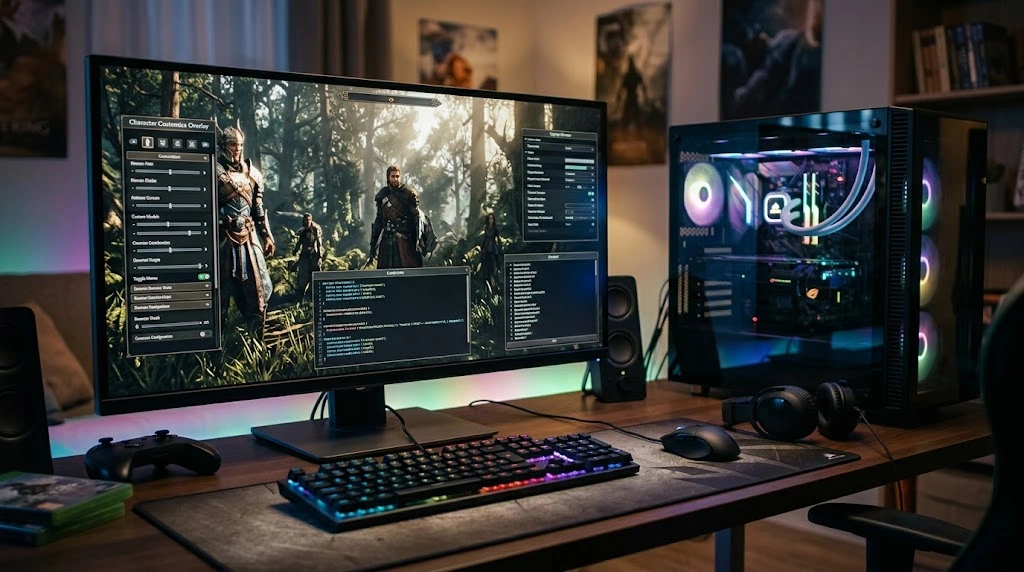
Searching for game mods lyncconf across the web often produces conflicting explanations. Some articles describe it as a brand-new video game, others suggest it is a standalone launcher, and a few even confuse the phrase with older corporate software conferences. In reality, the phrase game mods lyncconf represents an informational bridge. It connects players to the editorial guides, modding overviews, and curation content published within the dedicated gaming section of the LyncConf website.
Understanding this distinction saves players substantial time. The site itself functions as a discovery and educational hub rather than an active file repository. When you read an article under the game mods lyncconf banner, you are reading commentary, curated recommendations, and setup advice. The actual modification files, community patches, and engine tools reside on established hosting networks like Nexus Mods, ModDB, and the Steam Workshop. Treating these guides as curated reading lists allows you to explore creative concepts while downloading your software exclusively from original, verified mod authors.
| Resource Type | Representative Platforms | Primary Function | Ideal Use Case |
| Editorial Discovery Hub | LyncConf, PC Gamer, Rock Paper Shotgun | Curating mod lists, explaining game mechanics, writing installation tutorials | Discovering new modifications, understanding technical terms, finding gameplay ideas |
| Direct File Repositories | Nexus Mods, Steam Workshop, CurseForge, Modrinth | Hosting raw archives, version changelogs, creator endorsements, user bug reports | Downloading verified mod archives, checking patch compatibility, reading creator instructions |
| Local Mod Managers | Mod Organizer 2, Vortex, r2modman | Deploying files, managing plugin priority, organizing profiles, sorting overrides | Organizing mod installations, keeping game folders clean, resolving file conflicts |
Pre-Modding Foundation: Crucial Setup Steps Most Guides Skip
Jumping directly into downloading files without preparing your platform is the fastest route to a broken installation. Many players who research game mods lyncconf run into immediate stability issues because their base gaming setup lacks the necessary boundaries to handle external file hooks.
Freezing Automatic Launcher Updates
Modern digital platforms like Steam, the Epic Games Store, and the EA App automatically update games when a developer issues a patch. For an unmodded game, this is convenient. For a modded installation, an unannounced update will break your script extenders and custom plugins instantly.
Before introducing modifications, set your game on Steam to update only upon launch. Launch the game exclusively through your mod manager or custom script executable rather than the default storefront play button. This action prevents the launcher from overwriting your working game executable.
Isolating Game Directories from Protected Folders
Never install heavily modded games into default Windows system directories, such as Program Files or Program Files (x86). These folders enforce strict User Account Control permissions that prevent mod managers and external script hooks from generating cache files, rewriting configuration settings, or deploying virtual hardlinks. Moving your game library to a custom path on your solid-state drive eliminates unexplained permission errors and file write failures.
Installing Essential Engine Prerequisites
Many community modifications rely on external Windows development libraries to communicate with your graphics card and system memory. Before configuring advanced utilities, ensure your operating system has the following runtimes installed and up to date:
-
Microsoft Visual C++ Redistributable packages (both x86 and x64 architectures spanning from 2015 to current builds)
-
Latest Microsoft .NET Framework runtimes
-
DirectX End-User Runtimes to support older audio and rendering hooks used by classic gaming titles
Categorizing Game Modifications & Hardware Overhead
Community modifications vary wildly in scope. An informed approach to game mods lyncconf requires understanding how different types of mods interact with your hardware components and game code.
Visual Upgrades and Texture Overhauls
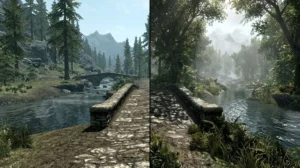
Visual modifications replace standard environment textures, character models, lighting systems, and weather cycles. While texture swaps are generally safe for your save files because they do not alter game logic, they place heavy demands on your hardware. High-resolution texture collections quickly consume available video random access memory. If your graphics card exhausts its dedicated memory, the system begins paging data into system RAM, resulting in visible micro-stuttering and sudden frame drops.
Gameplay Overhauls and Total Conversions
Gameplay mods rewrite core systems, including character progression, combat mathematics, enemy artificial intelligence, and environmental hazards. Total conversion projects go one step further by replacing original assets, quests, and landscapes to build an entirely new game atop the underlying engine. Because these projects alter foundational game records, pairing multiple broad gameplay changes together frequently triggers engine conflicts unless specific compatibility patches are applied.
Quality-of-Life Adjustments and Interface Improvements
Quality-of-life additions represent the safest starting point for beginners. These projects focus on user convenience, offering features such as expanded inventory grids, searchable map markers, modernized hotkey systems, and custom heads-up displays. They rarely corrupt save files and carry negligible performance penalties, making them ideal for initial modding experiments.
Script Extenders and Engine Frameworks
Complex community projects often require actions that standard game engines do not permit. Script extenders, such as SKSE for Skyrim, F4SE for Fallout 4, and SMAPI for Stardew Valley, expand the scripting capabilities of the native executable. These frameworks run alongside the game process, allowing developers to create advanced mechanics. Because they hook directly into memory, they must match your game executable build down to the exact version number.
The Mod Management Tech Stack: Choosing the Right Tools
Managing community content through manual folder extraction is an obsolete practice that inevitably ruins clean game installations. A proper setup relies on dedicated management software designed to handle file deployment, conflict detection, and plugin sorting.
Mod Organizer 2
Mod Organizer 2 represents the gold standard for Bethesda titles and select single-player role-playing games. Its defining feature is a Virtual File System. Instead of writing external assets into your game folder, it stores each modification in an isolated directory. When you launch the game through the manager, the program presents a virtual directory structure to the game engine. Your core game folder remains entirely pristine, allowing you to activate, deactivate, or rearrange massive mod lists without ever needing to reinstall the base game.
Vortex
Developed by Nexus Mods, Vortex offers broad out-of-the-box compatibility across hundreds of modern titles. It uses a hardlink deployment method, creating lightweight pointers inside the game directory that link directly to a centralized staging folder. Vortex features integrated sorting algorithms, automated conflict resolution alerts, and direct profile management, making it an excellent option for players who want structured control paired with a friendly interface.
Specialized Loaders: CurseForge, Modrinth, and Community Launchers
For sandbox titles like Minecraft, traditional mod managers are replaced by dedicated instance managers. Launchers such as the CurseForge application, Modrinth App, and Prism Launcher isolate specific game versions alongside targeted mod loaders, including Fabric, NeoForge, and classic Forge. For titles like Risk of Rain 2 or Lethal Company, modular managers like r2modman provide simple, profile-based control tailored specifically to community modding frameworks.
Step-by-Step Protocol: Installing Mods Without Crashing
Adopting a methodical workflow prevents instability and minimizes troubleshooting time. When following advice associated with game mods lyncconf, apply this step-by-step installation sequence to maintain game stability.
[1. Verify Runtime Version]
       ↓
[2. Backup Save Files]
       ↓
[3. Install Frameworks & Extenders]
       ↓
[4. Deploy Content via Manager]
       ↓
[5. Optimize Load Order with LOOT]
       ↓
[6. In-Game Testing & Verification]
1. Verify Your Base Game Version
Check the exact version number of your game executable by right-clicking the application file in its main directory, selecting Properties, and reviewing the Details tab. Modifications, particularly those relying on script extenders, are engineered for specific game builds. Downloading an asset designed for an older or newer executable will cause immediate crashes upon launch.
2. Isolate and Back Up Save Games
Locate your game save folder, typically found in your Windows Documents folder under My Games or inside your user profile AppData path. Create a compressed backup copy of your unmodded saves on an external drive or cloud storage folder. Testing new modifications on your primary, hard-earned save file without a fallback copy risks permanent progress loss.
3. Deploy Frameworks and Script Extenders
If your chosen additions require a script extender or base framework, install these components first. Most script extenders require manual placement directly in the root directory where the main executable sits, rather than within the subfolders used by ordinary mods. Follow the creator’s exact documentation, configure any necessary configuration files, and launch the game once to verify the framework initializes correctly.
4. Install Content Modules via Your Manager
Import your downloaded archives into your chosen mod manager rather than extracting them manually. Verify that all listed prerequisites are present in your active list. Enable the mod, ensure any optional installation menus are configured to match your game edition, and confirm that required support patches are selected.
5. Optimize Load Order Using LOOT
In games utilizing plugin architectures, such as Bethesda titles, load order dictates which plugin takes priority when two files modify the same record. The Load Order Optimization Tool reads extensive community masterlists to organize your plugins automatically, pointing out missing master dependencies, dirty edits, and necessary compatibility patches. Run this tool after adding new content to maintain structural harmony across your active plugins.
6. Perform Controlled In-Game Testing
Launch the game and enter a controlled test environment rather than jumping into your main campaign. Check specific elements altered by your latest additions. If you installed a texture pack, verify surfaces in exterior and interior spaces; if you added an interface mod, open menus to confirm text alignment. Once confirmed stable, proceed to add additional content gradually.
Troubleshooting Engine Errors & Resolving Conflicts
Even careful players occasionally encounter technical errors. Knowing how to systematically isolate and resolve conflicts keeps your game functional without requiring complete reinstallation.
The Half-Split Isolation Technique
When a game crashes during startup or freezes randomly within a mod list containing dozens of active plugins, guessing the culprit is ineffective. Use the half-split binary search method:
-
Disable half of your active non-essential modifications inside your manager.
-
Launch the game and attempt to recreate the issue.
-
If the error persists, the problematic mod resides within the currently active half.
-
If the error disappears, the culprit is among the disabled half.
-
Reactivate half of the suspected group and repeat the test. Through a process of elimination, you can pinpoint the offending file in only a few rounds of testing.
Resolving Missing Master Files (Crash to Desktop on Launch)
If your game attempts to launch, displays a black screen or initial logo, and immediately crashes back to the desktop without an error prompt, you almost certainly have a missing master file. This occurs when an installed plugin depends on another mod that is missing, disabled, or placed lower in the load order. Review your mod manager or run your load order tool to spot highlighted red warning flags indicating missing prerequisites.
Addressing Save Bloat and Orphaned Scripts
A common danger of modern modding involves uninstalling complex, script-heavy modifications in the middle of a playthrough. Many game engines permanently bake active scripts and global variables directly into your character save files.
Removing the source mod leaves orphaned scripts running in the background, continuously searching for missing references. This leads to save game bloat, escalating stutter, and eventual save corruption. Reserve mid-playthrough removals for simple texture swaps or lightweight interface mods, keeping gameplay overhauls consistent throughout an entire character run.
Multiplayer Compliance, Anti-Cheat, and Security Measures
A critical aspect often overlooked when discussing game mods lyncconf is the boundary between creative customization and account security. The freedom enjoyed in single-player experiences does not translate directly to online environments.
Navigating Anti-Cheat Software
Modern competitive multiplayer titles rely on sophisticated anti-cheat systems, such as Easy Anti-Cheat, BattlEye, and proprietary kernel-level drivers. These tools continuously monitor system memory, verifying the cryptographic integrity of all game files.
Modifications that inject dynamic link libraries into active game processes or alter local game files are often flagged as unauthorized cheat programs, regardless of whether your intent was purely cosmetic. Never join official online multiplayer servers with modified game files unless the game provides explicit, developer-approved modding lobbies.
Verifying Archive Authenticity and Safety
Because game modifications run executable code or hook directly into system processes, obtaining them from secure sources is paramount. Apply basic security hygiene whenever you source new files:
-
Download files exclusively from trusted platforms that perform automatic server-side malware scanning, such as Nexus Mods or CurseForge.
-
Never execute standalone installation files (.exe or .msi) for simple texture packs, audio clips, or config changes.
-
Upload unfamiliar archives to multi-engine scanning tools like VirusTotal to check file integrity before extracting them.
-
Review community comment sections and bug trackers; active projects with transparent development histories provide reliable accountability.
FAQs
What is the primary difference between game mods lyncconf guides and platforms like Nexus Mods?
Articles regarding game mods lyncconf focus on editorial discovery, game reviews, and installation explanations. Nexus Mods, by contrast, is an actual hosting repository that stores the physical mod files, offers community feedback boards, and delivers developer-uploaded updates.
Can modifying my games result in a platform ban on Steam?
Modifying single-player games offline will not result in a Valve Anti-Cheat ban or platform suspension. However, attempting to use modifications on multiplayer servers protected by VAC or third-party anti-cheat systems can result in permanent account bans.
What should I do if a new official game update breaks my modded setup?
If a developer releases an official patch that disables your script extender, you have two choices: wait patiently for mod authors to update their files to match the new executable version, or use community rollback utilities to downgrade your game executable to the previous working build.
Are game modifications legal to download and use?
Creating and downloading free community modifications for legally owned single-player games is entirely legal and widely embraced by developers. However, distributing copyrighted game assets, selling modifications without publisher permission, or using modifications to bypass digital rights management breaches user licensing agreements.
Do visual modifications affect game performance significantly?
High-resolution texture packs, volumetric lighting overhauls, and custom post-processing shaders demand substantial computing resources. While basic visual tweaks run smoothly on mid-range hardware, massive visual overhauls require ample video memory and strong graphics processing to maintain stable frame rates.
Approaching the world of game mods lyncconf with the proper technical perspective turns what could be a frustrating troubleshooting exercise into a rewarding hobby. By establishing a solid pre-modding setup, deploying files through virtual managers, respecting version compatibility, and adhering to strict online safety rules, you can completely modernize your favorite games while ensuring your system and save files remain rock-solid.






Leave a Reply